Off-Grid in the Chilcotin Region

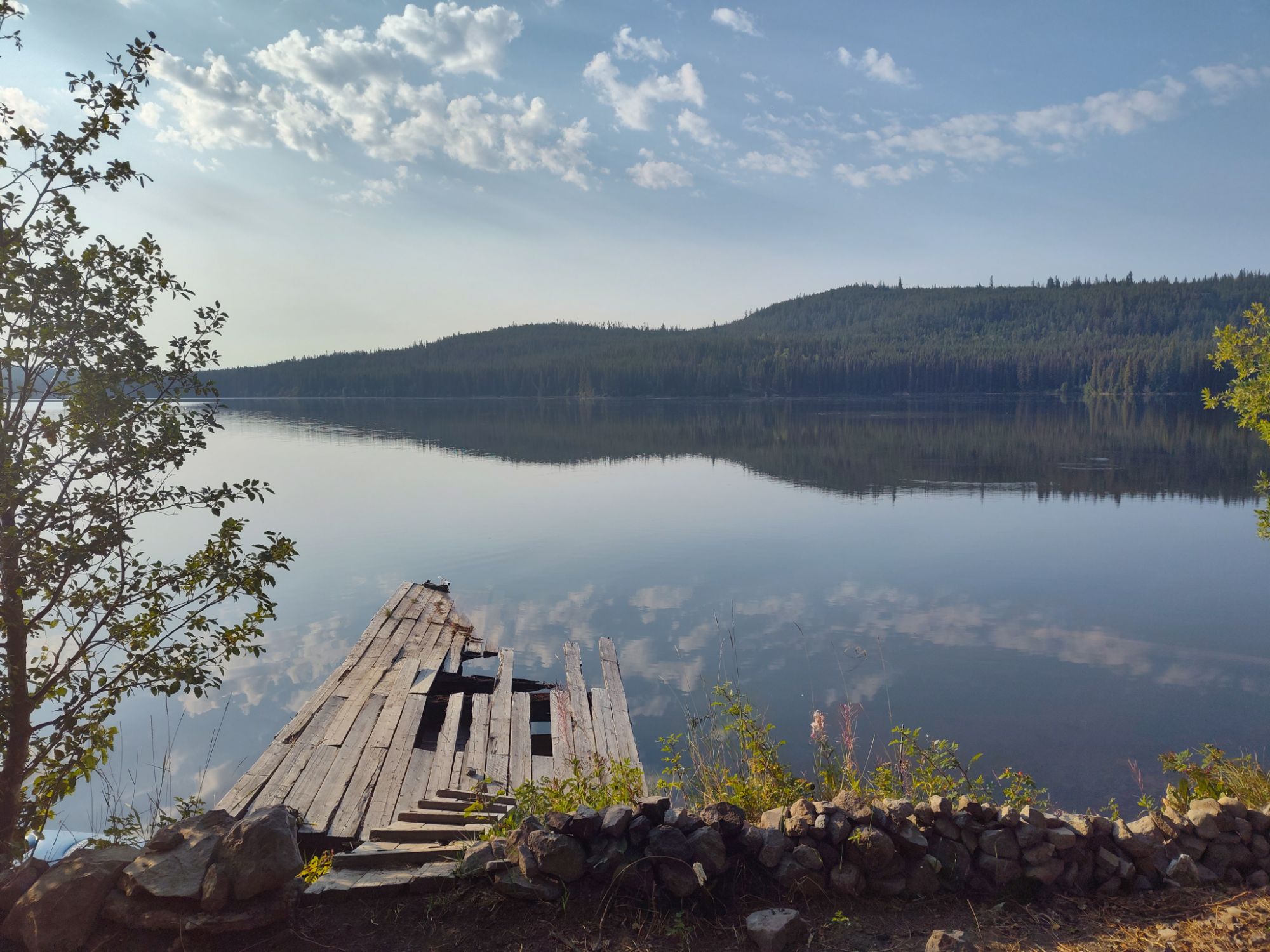
I’m currently living off-grid in the central interior of British Columbia’s Chilcotin region, on the west coast of Canada. The nearest urban center is 3.5 hours away by car (Williams Lake). The situation is a small farm in a valley, on the edge of a lake. 

In this post:

    • How I got here

    • The off-grid setup

How I got here

Off-grid living has been of interest to me for a number of years – but off-grid communities only came into my purview about eight months ago – after a frustrated rant about leaving society to live in a cabin in the woods resulted in the knowledge that groups of people already did that – living sustainably off the land, and that if I did my research, surely I could find them, or at the very least learn more about them.

So, I did my research.

I joined a Facebook group called Living Off-Grid in CANADA. I read posts about how people were living off-grid, what problems they were facing, the successes they shared, and the kinds of help and advice they ask for from others in the group. 

Eventually, I saw a post looking for someone to join them on their off-grid set up and help out. So, I responded.

We set up a introduction phone call and started chatting back and forth . We spent weeks sussing each other out.

I decided I wanted in.

They decided they wanted in.

So we coordinated logistics and I got on a plane.


Where I’m staying: the off-grid setup

The farm is made up of the house, the barn, the cabin, the coup, the orchard, and 25 acres of land – a mix of woods, marsh, pastures. 

My cabin is one room with a wood stove and no running water. Electricity is powered by propane and there is an out house for bodily needs. Water can be procured from the lake and filtered or filled from the tap at the house, which is provided and filtered from a well. 

The house is a log home that has gradually been outfitted with all modern amenities, powered by solar panels and batteries. Propane is used for kitchen appliances, the water heater, and the backup lights. A generator is available as a backup power source, as needed. A water tank is used to hold 100L of water at a time, and when it runs low it must be filled back up by the pump connected to the generator. 

The farm 

The barn and the lean-to for milking are part of a fenced in pen for the cows. The upper level is where the rabbit cages are and down below is where the cows sleep or huddle together against the wind and cold. The pen is encircled by an electric fence and covers an area about half an acre.

Next to the cow pen is the chicken coup. There are four Icelandic chickens, two males and two females. One pair is old enough for breeding and (sometimes) produces eggs. Icelandic chickens can be left alone to roam free-range if the flock has enough numbers. Icelandic chickens are more vicious than the farm chickens we’re used to seeing in Canada. They’ll attack and defend themselves; they can also fly. Once your flock is at least 12 strong, they can safely roam on their own and protect themselves. 

Next to the cow pen is the chicken coup. There are four Icelandic chickens, two males and two females. One pair is old enough for breeding and (sometimes) produces eggs. Icelandic chickens can be left alone to roam free-range if the flock has enough numbers. Icelandic chickens are more vicious than the farm chickens we’re used to seeing in Canada. They’ll attack and defend themselves; they can also fly. Once your flock is at least 12 strong, they can safely roam on their own and protect themselves. 

The orchard and marsh are opposite the barn. This is only the second summer for most of the trees in the orchard, but they all bear fruit. The orchard includes apple, plum, and cherry trees. The marsh is untouched and runs down to the edge of the lake. 

The orchard and marsh are opposite the barn. This is only the second summer for most of the trees in the orchard, but they all bear fruit. The orchard includes apple, plum, and cherry trees. The marsh is untouched and runs down to the edge of the lake. 

Marsh
Orchard

Various vegetables and edible plant life are grown around the farm. The greenhouse keeps tomatoes, tomatillo, mint, basil, zucchini, yellow beans, and a couple other varieties of squash. 

Peppermint has been planted and grows all over and the little row boat houses different varieties of pumpkin. A row of stacked tires was also the testing grounds for a new attempt at growing potatoes this year. 

Mini-Marsol (row boat)
Greenhouse

The rest of the land is primarily wooded. Trees are cut down and bucked every year and those logs are cut and chopped for fire wood. 

What’s Next: a typical day on the farm

That’s all for now. Until next time, thanks for visiting, shanti, and happy reading!  

Posted in

Leave a Reply

Discover more from Next Great Adventure

Subscribe now to keep reading and get access to the full archive.

Continue reading