
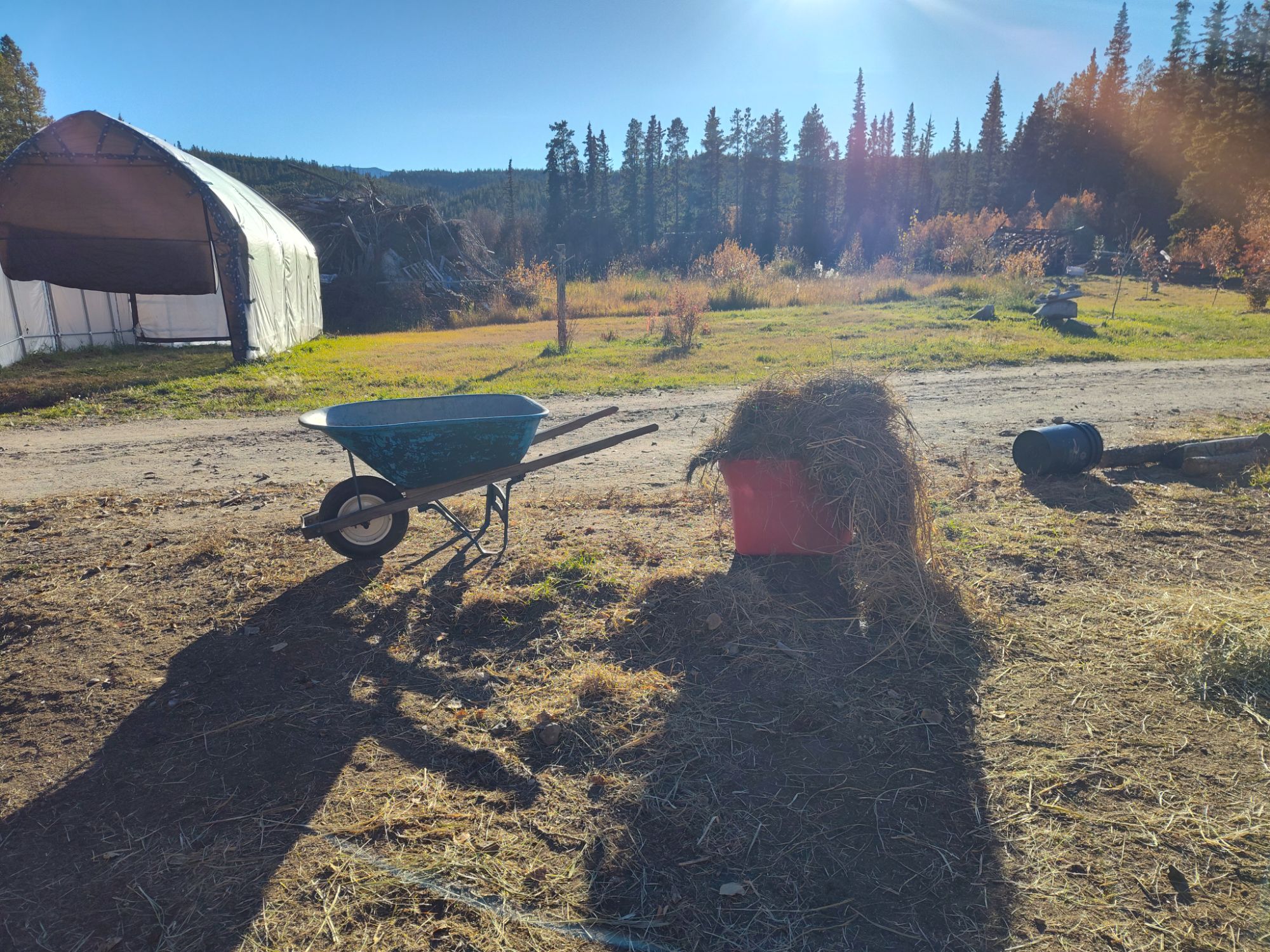
Farm life is slower than city life. Things move at a different pace. There’s no rush to get out the door, beat traffic, hurry into work and field customers, phone calls, emails, and meetings at a relentless rate. There is however, and endless list of things that need to be done.
A typical day starts and ends with the animals – but what happens in between is often left to the whims of mother nature.
In this post:
- the animals
- the milk
- the seasons
The animals
There are many animals on the farm and the day typically starts with feeding and watering them all.
I let the dogs out when I go into the house to fill up fresh water bottles for the rabbits, then they wander around the farm with me (or without me) while I go about checking on all the other animals.

I swap out the rabbit water with fresh bottles and give them each a scoop of food. Then I visit the chickens and toss two handfuls of feed into each enclosure. I check their water and if it’s dirty I toss it and let the self-filling watering can refill itself. If it’s empty I take it back up to the house to refill and if it’s frozen, I take it back up to the house to thaw by the stove.
Next is the cows. I am not proficient at wielding hay with a pitchfork. Each cow needs 30-35lbs of hay per day. The cows get fed twice a day, so that’s 15-17lbs per cow in the morning and evening. With three cows, I’m moving 45-50lbs of hay for breakfast – and then again for dinner.
This usually involves some swearing, a good deal of frustration, and being covered from head to toe in hay by the time I’m done.
It’s important not to drop the hay in any cow droppings and it’s important to not have concentrated areas where all the dung is. So, the hay gets dispersed into three piles that move around the pen.
This tactic both prevents the build up of cow dung in one area and ensures all cows get a fair opportunity to eat. Both the older cows will pick on the calf a little bit and prevent him from getting at the hay pile if they’re already there eating. With three hay piles for three cows, everyone can eat in peace.
Once all the animals have been fed, I prepare grain for the cows. The grain gives them extra nutrients and goodies that they don’t get from hay – and also acts as a diversion during milking.
The milk
After feeding and watering the animals, I return to the house with the old rabbit water bottles (and chicken waters, if necessary) and prepare materials for milking.
I fill a bucket with soap and water, add a cloth, and snap the lid on. I grab a small container of coconut oil and I grab the milking pail.
If the calf is still nursing, the milking cow (Tilly) goes into the lean-to overnight, to prevent the calf from nursing and letting her produce and fill up with milk. If the calf is not nursing, Tilly gets bribed away from the hay and into the lean-to in the morning – just in time for milking.
Then all the cows get grain. The grain is a mix of oats, sweet feed, beet pulp pellets and alfalfa. Feeding grain happens in two parts: the milking cow, and everyone else. Along with supplementing their diet, grain is a diversion. For Tilly, it’s a distraction from being milked. For everyone else, it’s a distraction so they’re not bothering Tilly and making her antsy while I’m in the pen with her.

A bucket of grain gets dispersed along the back of the pen, and while the other cows are busy with that, I bring a separate bowl of grain to the lean-to for Tilly. I set up for milking, I give Tilly the grain, and then I milk her – hopefully with no muss and fuss.
If she was well behaved, I let her out of the lean-to when I’m leaving with the milk – easy peasy. If she was difficult, full of attitude, or not doing her part in the milking ritual, she gets a 30-minute time out in the lean-to before going back into the pen with the others.
She does know what she is and isn’t supposed to do during milking, so the time-out does wield behavioural results. She knows she’s supposed to be let out after milking and she doesn’t like the break in routine and being kept from the others.
Once I’m out of the pen, I gather up all the milking supplies (and the milk) and return to the house to filter the milk.
The seasons
Aside from feeding and watering the animals, the rest of the tasks and chores in a day depend on the seasons.
In the warm season, things grow; in the cold season there are heaps of snow and ice. As the seasons change, the chores and tasks change.
During the warm or dry season, plants get watered every day; there’s maintenance in the green house; things are planted, fertilized, and harvested; and projects are worked on.
In the cold season, tasks become about keeping warm and free of snow. Trees get felled and bucked, wood gets chopped and stacked, and solar panels and electric fencing get cleared of snow and ice. Things freeze and you have to fix it or heat/thaw it. Temperatures get down to -40°C with a windchill.
What’s Next: milking the cow and filtering the milk
That’s all for now. Until next time, thanks for visiting, shanti, and happy reading!


Leave a Reply